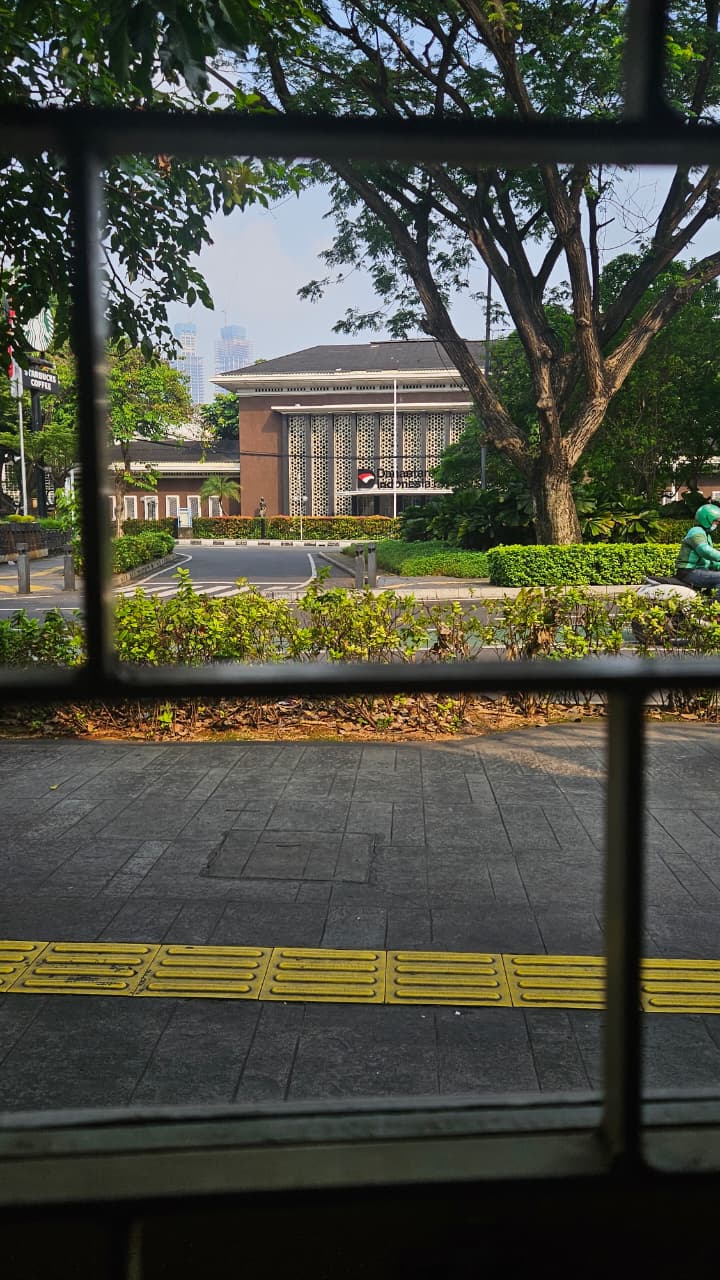
Money That Outlives Its Source: The Quiet Logic of Sovereign Wealth Funds
Pict taken by Reza Fahlevi
Norway's national ledger contains a fact that should be more famous than it is. Of the roughly NOK 21,300 billion (north of US$2 trillion) sitting in its sovereign wealth fund at the end of 2025, about NOK 13,500 billion came from investment returns. Not from oil. From markets. Most of Norway's sovereign wealth was never under the seabed. It was created by capital that was planted early, fenced off from politicians, and left alone to grow.
That fact is the entire argument for sovereign wealth funds, compressed into one line. Every windfall comes with a deadline: oil fields deplete, commodity booms end, demographic dividends expire. The only way to beat the deadline is to convert temporary income into permanent capital before the clock runs out.
Indonesia joined this club in 2025 with Danantara. The trouble is that Danantara is routinely described, praised, and attacked using the wrong yardstick. It is compared to Norway's fund by headline asset size, when it is not a savings fund at all. Understanding what it actually is, and what would actually make it succeed, requires first understanding that "sovereign wealth fund" is one label stretched across several very different machines.
The rulebook is the fund
Mechanically, an SWF is unexotic: a government channels surplus revenue (petroleum earnings, foreign exchange reserves, budget surpluses, or dividends from state companies) into a professionally managed global portfolio and leaves it alone to compound. What separates a genuine sovereign fund from a government slush account is not the money but the rulebook: hard limits on annual withdrawals, investment decisions insulated from day-to-day politics, and a time horizon measured in generations rather than election cycles.
When the rulebook holds, the public gets paid through two channels. In the short run, the fund is a shock absorber: when oil prices collapse or a pandemic blows a hole in the budget, the state draws on investment income instead of slashing services or borrowing at panic rates. In the long run, it is an endowment. Norway's fiscal rule lets the government spend only a small fraction of the fund's expected long-term return each year, so the principal is never consumed. The oil will eventually stop flowing; the dividend to Norwegian citizens will not.
When the rulebook fails, the same structure produces the opposite outcome. Malaysia's 1MDB, founded in 2009 with the same vocabulary of national development and strategic investment, collapsed into one of the largest financial scandals in history within six years. The lesson is uncomfortable but clarifying: the institutional form guarantees nothing. Everything depends on governance.
One label, four machines
Look closely at the world's leading funds and you find at least four distinct species wearing the same name.
The savings fund. Kuwait got there first. The Kuwait Investment Board was set up in London in 1953, before Kuwait was even an independent country, on the far-sighted premise that a nation living off one finite commodity needed a second source of wealth. Its successor, the Kuwait Investment Authority, now manages roughly a trillion dollars, anchored by the Future Generations Fund: an overseas-only endowment that by law receives a minimum share of state revenues and is treated as untouchable. Norway's Government Pension Fund Global is the same species at maximum scale and maximum transparency. It is invested entirely outside Norway (to diversify, and to keep petroleum money from overheating the domestic economy), spread across roughly 7,200 companies, about 1.5 percent of every listed share on the planet, and it publishes nearly everything: holdings, returns, voting records, ethical exclusions.
The reserve manager. Singapore's GIC, founded in 1981, manages the nation's foreign reserves conservatively against a rolling 20-year real return target. Its job is to preserve purchasing power, not to shoot the lights out, and it famously refuses to disclose its size, reasoning that publishing the full extent of Singapore's reserves would hand ammunition to currency speculators. Outside estimates place it between US$700 and US$900 billion.
The strategic holding company. Temasek, established in 1974, sits at the other end of the spectrum. It owns its portfolio outright and behaves like an engaged shareholder: concentrated stakes, heavy equity exposure, active involvement in companies from Singapore's banks to global tech and life sciences. Its net portfolio value stood at S$434 billion as of March 2025. One country, one pool of national wealth, two deliberately opposite mandates.
The development fund. A fourth species invests at home to build capacity (ports, industrial estates, downstream processing) and accepts that some returns arrive as GDP rather than dividends. Indonesia already had one: INA, the Indonesia Investment Authority, established in 2021 to co-invest with foreign capital in domestic infrastructure.
The taxonomy matters because each species is judged differently. A savings fund is judged by long-run real returns and the inviolability of its rules. A reserve manager by purchasing-power preservation. A holding company by whether it improves the companies it owns. Grade one species with another's report card and you get nonsense.
Danantara, graded on the right curve
Danantara, launched in February 2025 and openly inspired by Temasek, is a strategic holding company, the third species, with a development mandate bolted on (it absorbed INA at inception). It is not funded by oil rents or fiscal surpluses; Indonesia runs budget deficits. Its capital is the government's ownership of its largest state-owned enterprises (the Himbara banks, Pertamina, PLN, Telkom, and hundreds more) consolidated under one roof, with their dividends as the recurring income. The headline figure of roughly US$900 billion to US$1 trillion describes the consolidated assets of those enterprises, not a liquid portfolio in the Norwegian sense. Comparing it to Norway's fund by asset size is a category error in both directions.
Graded as a holding company, the early moves are legible. SOE dividends flowing to Danantara were projected around US$7 billion in its first year, with management targeting US$7 to 10 billion within five years. Consolidation aims to shrink roughly a thousand state entities to a few hundred. Commissioner boards have been cut from an average of fifteen seats to five to seven. Regulation has steadily widened its authority: PP 19/2026 gave it control over SOE dividend management, holding formation, and board nominations. Co-investment vehicles have been signed with Qatar's QIA and China's CIC, while similar partnerships with Saudi Arabia's PIF and the UAE are still being explored.
Here, though, the Temasek comparison, flattering as it is, needs a caveat that rarely gets said aloud. Temasek did not build Singapore's governance; it inherited it. By 1974 Singapore already had budget surpluses, a famously clean civil service, and courts investors trusted. Temasek's task was to compound within an existing institution of trust. Danantara's task is harder: it must improve its companies and construct the institutional credibility around itself at the same time, through audited accounts, published portfolios and track records, appointments that survive scrutiny, and insulation from the political calendar of the very government that created it. That is the dimension on which serious observers, from parliament to rating agencies, are actually watching. It is also where 1MDB stands as the permanent cautionary tale: same structure, same vocabulary, opposite rulebook.
What compounds is trust
The arithmetic of starting early is unforgiving. Kuwait's fund, seeded with modest sums in the 1950s, compounded through wars and oil crashes into a trillion-dollar endowment. That growth came not because Kuwait saved more than anyone else, but because it started two decades before anyone else. Singapore inverted the formula entirely: no oil, no windfall, just surpluses saved with discipline since the 1970s. In compounding, the earliest contributions do a disproportionate share of the work; a decade of delay costs far more at the end than it appears to at the beginning.
For a holding company like Danantara, however, the thing that compounds is not primarily cash. It is credibility. Norway's fund can publish everything and withdraw almost nothing because five decades of unbroken rules made its promises believable, and that believability is itself an asset, lowering the cost of every future decision. Trust compounds exactly like capital: slowly, invisibly, and only if the early deposits are never raided. So does its opposite.
The size of Danantara's first financial deposit therefore matters much less than the credibility of the rules around it. The first audited annual report, the first published portfolio, the first board appointment made on merit against political pressure: these are the seed capital. Plant them now, and let time, the one input money cannot buy back, do what it does.
Pict taken by Reza Fahlevi
Ada satu fakta di pembukuan negara Norwegia yang seharusnya jauh lebih terkenal. Dari nilai dana kekayaan negaranya sebesar sekitar 21.300 miliar krona (lebih dari 2 triliun dolar AS) pada akhir 2025, sekitar 13.500 miliar krona berasal dari hasil investasi. Bukan dari minyak. Dari pasar. Sebagian besar kekayaan Norwegia sesungguhnya tidak pernah ada di dasar laut. Kekayaan itu diciptakan oleh modal yang ditanam sejak dini, dipagari dari tangan politisi, dan dibiarkan tumbuh sendiri.
Fakta itu adalah seluruh argumen tentang sovereign wealth fund yang dipadatkan dalam satu kalimat. Setiap rezeki besar ada masa habisnya: ladang minyak akan kering, harga komoditas akan jatuh, bonus demografi akan berlalu. Satu-satunya cara mengalahkan tenggat itu adalah mengubah pendapatan sesaat menjadi kekayaan permanen sebelum waktunya habis.
Indonesia masuk klub ini pada 2025 lewat Danantara. Masalahnya, Danantara terlanjur dipuji dan diserang dengan tolok ukur yang salah. Ia dibandingkan dengan dana Norwegia lewat angka aset, padahal ia sama sekali bukan dana tabungan. Untuk memahami Danantara, dan apa yang sesungguhnya menentukan berhasil-tidaknya, kita perlu paham dulu bahwa sovereign wealth fund adalah satu label yang dipakai beberapa mesin yang sangat berbeda.
Aturan mainnya adalah dananya
Secara mekanis, SWF tidak eksotis: pemerintah menyisihkan kelebihan pendapatan (hasil minyak, cadangan devisa, surplus anggaran, atau dividen perusahaan negara) ke portofolio global yang dikelola profesional, lalu membiarkannya tumbuh puluhan tahun. Pembeda antara SWF sungguhan dan sekadar kas cadangan pemerintah bukanlah uangnya, melainkan aturan mainnya: batas penarikan tahunan yang tegas, keputusan investasi yang dijauhkan dari politik sesaat, dan cakrawala waktu yang dihitung dalam generasi, bukan lima tahunan masa jabatan.
Ketika aturan itu ditegakkan, rakyat menerima manfaat lewat dua pintu. Jangka pendek, dana ini menjadi bantalan: saat harga minyak anjlok atau pandemi menghantam anggaran, negara memakai hasil investasinya tanpa harus memangkas layanan publik atau berutang mahal. Jangka panjang, ia menjadi warisan. Aturan fiskal Norwegia hanya membolehkan pemerintah membelanjakan sebagian kecil dari perkiraan imbal hasil jangka panjang setiap tahun, sehingga pokok dananya tidak pernah disentuh. Minyaknya suatu hari akan habis; "dividen" untuk rakyat Norwegia tidak.
Ketika aturan itu gagal, struktur yang sama melahirkan hasil sebaliknya. 1MDB milik Malaysia, didirikan 2009 dengan kosakata yang sama tentang pembangunan nasional dan investasi strategis, runtuh menjadi salah satu skandal keuangan terbesar dalam sejarah hanya dalam enam tahun. Pelajarannya tidak enak tapi menjernihkan: bentuk kelembagaan tidak menjamin apa pun. Semuanya bergantung pada tata kelola.
Satu label, empat mesin
Amati dana-dana terkemuka dunia dan Anda akan menemukan setidaknya empat spesies berbeda yang memakai nama yang sama.
Dana tabungan. Kuwait pelopornya. Kuwait Investment Board berdiri di London pada 1953, bahkan sebelum Kuwait merdeka, dengan premis jauh ke depan: negara yang hidup dari satu komoditas perlu sumber kekayaan kedua. Penerusnya, Kuwait Investment Authority, kini mengelola sekitar 1 triliun dolar AS, dengan jangkar Future Generations Fund: dana abadi yang seluruhnya diinvestasikan di luar negeri, menerima jatah minimum dari pendapatan negara berdasarkan undang-undang, dan haram diutak-atik. Government Pension Fund Global milik Norwegia adalah spesies yang sama pada skala dan transparansi maksimal. Seluruh dananya diinvestasikan di luar Norwegia (untuk diversifikasi, sekaligus mencegah uang minyak membuat ekonomi domestik kepanasan), tersebar di sekitar 7.200 perusahaan, kira-kira 1,5 persen dari seluruh saham tercatat di dunia, dan hampir semuanya dibuka: kepemilikan, imbal hasil, catatan voting, hingga daftar perusahaan yang dicoret karena alasan etika.
Pengelola cadangan. GIC milik Singapura, berdiri 1981, mengelola cadangan devisa negara secara konservatif dengan ukuran keberhasilan berupa imbal hasil riil 20 tahun bergulir. Tugasnya menjaga daya beli, bukan mengejar untung besar, dan ia terkenal menolak membuka jumlah dana kelolaannya dengan alasan masuk akal: mengumumkan ukuran penuh cadangan Singapura sama saja memberi peluru bagi spekulan mata uang. Taksiran pihak luar menempatkannya di kisaran 700 sampai 900 miliar dolar AS.
Holding company strategis. Temasek, berdiri 1974, ada di ujung spektrum yang lain. Ia memiliki portofolionya secara langsung dan bertindak sebagai pemegang saham aktif: kepemilikan terkonsentrasi, didominasi saham, dan ikut campur langsung di perusahaan yang dimilikinya, dari bank-bank Singapura sampai teknologi dan life sciences global. Nilai portofolio bersihnya 434 miliar dolar Singapura per Maret 2025. Satu negara, satu kekayaan nasional, dua mandat yang sengaja dibuat bertolak belakang.
Dana pembangunan. Spesies keempat berinvestasi di dalam negeri untuk membangun kapasitas, seperti pelabuhan, kawasan industri, dan hilirisasi, serta menerima bahwa sebagian imbal hasilnya datang dalam bentuk PDB, bukan dividen. Indonesia sebenarnya sudah punya satu: INA, Indonesia Investment Authority, didirikan 2021 untuk berinvestasi bersama modal asing di infrastruktur domestik.
Taksonomi ini penting karena tiap spesies dinilai dengan cara berbeda. Dana tabungan dinilai dari imbal hasil riil jangka panjang dan kesucian aturannya. Pengelola cadangan dari terjaganya daya beli. Holding company dari kemampuannya memperbaiki perusahaan yang dimilikinya. Menilai satu spesies dengan rapor spesies lain hanya menghasilkan kesimpulan yang keliru.
Danantara, dinilai dengan kurva yang benar
Danantara, diluncurkan Februari 2025 dan terang-terangan mencontoh Temasek, adalah holding company strategis, spesies ketiga, dengan mandat pembangunan yang menempel padanya (ia menyerap INA sejak awal). Ia tidak didanai rente minyak atau surplus fiskal; anggaran Indonesia justru defisit. Modalnya adalah kepemilikan pemerintah di BUMN-BUMN terbesar (bank-bank Himbara, Pertamina, PLN, Telkom, dan ratusan lainnya) yang dipindahkan ke bawah satu atap, dengan dividen mereka sebagai pemasukan rutin. Angka 900 miliar sampai 1 triliun dolar AS yang sering dikutip media adalah nilai aset gabungan BUMN-BUMN itu, bukan portofolio likuid seperti punya Norwegia. Membandingkannya dengan dana Norwegia lewat ukuran aset adalah salah kategori dari dua arah sekaligus.
Dinilai sebagai holding company, langkah-langkah awalnya terbaca jelas. Dividen BUMN yang mengalir ke Danantara diproyeksikan sekitar 7 miliar dolar AS di tahun pertamanya, dengan target manajemen 7 sampai 10 miliar dolar dalam lima tahun. Konsolidasi menargetkan penciutan sekitar seribu entitas negara menjadi ratusan. Jumlah komisaris dipangkas dari rata-rata lima belas kursi menjadi lima sampai tujuh. Kewenangannya terus diperluas lewat regulasi: PP 19/2026 memberinya kendali atas pengelolaan dividen BUMN, pembentukan holding, dan pencalonan direksi. Kendaraan investasi bersama sudah diteken dengan QIA Qatar dan CIC Tiongkok, sementara kemitraan serupa dengan PIF Arab Saudi dan Uni Emirat Arab masih dalam tahap penjajakan.
Di titik inilah perbandingan dengan Temasek, semenyanjung apa pun, butuh satu catatan yang jarang diucapkan terang-terangan. Temasek tidak membangun tata kelola Singapura; ia mewarisinya. Pada 1974, Singapura sudah punya surplus anggaran, birokrasi yang terkenal bersih, dan pengadilan yang dipercaya investor. Tugas Temasek adalah ber-compound di dalam institusi kepercayaan yang sudah jadi. Tugas Danantara lebih berat: ia harus memperbaiki perusahaan-perusahaannya dan membangun kredibilitas institusional di sekeliling dirinya pada saat yang sama, lewat laporan keuangan yang diaudit, portofolio dan rekam jejak yang dipublikasikan, penunjukan pejabat yang tahan uji, serta jarak yang aman dari kalender politik pemerintah yang justru melahirkannya. Di dimensi inilah pengamat serius, dari parlemen hingga lembaga pemeringkat, sesungguhnya menaruh perhatian. Di sanalah pula 1MDB berdiri sebagai peringatan abadi: struktur sama, kosakata sama, aturan main berkebalikan.
Yang ter-compound adalah kepercayaan
Matematika memulai lebih awal memang kejam. Dana Kuwait, dimulai dengan jumlah sederhana pada era 1950-an, tumbuh melewati perang dan berkali-kali kejatuhan harga minyak menjadi dana abadi satu triliun dolar. Pencapaian itu lahir bukan karena Kuwait menabung lebih banyak dari negara lain, melainkan karena memulai dua puluh tahun lebih dulu. Singapura membalik rumusnya: tanpa minyak, tanpa durian runtuh, hanya surplus yang ditabung dengan disiplin sejak era 1970-an. Dalam compounding, setoran paling awal justru bekerja paling keras; menunda sepuluh tahun terlihat sepele di awal, tapi ongkosnya sangat mahal di ujung.
Bagi holding company seperti Danantara, justru bukan uang tunai yang terutama ter-compound, melainkan kredibilitas. Dana Norwegia bisa membuka hampir semuanya dan menarik hampir tidak ada apa-apanya karena lima dekade aturan yang tak pernah dilanggar membuat janjinya bisa dipercaya, dan kepercayaan itu sendiri adalah aset yang menurunkan ongkos setiap keputusan berikutnya. Kepercayaan ter-compound persis seperti modal: pelan, tak kasatmata, dan hanya jika setoran-setoran awalnya tidak pernah dijarah. Begitu pula lawannya.
Besar kecilnya setoran finansial pertama Danantara, dengan demikian, jauh kurang penting dibanding kredibilitas aturan yang mengelilinginya. Laporan tahunan teraudit yang pertama, portofolio terpublikasi yang pertama, penunjukan direksi pertama yang lolos dari tekanan politik: itulah modal awalnya yang sesungguhnya. Tanam sekarang, dan biarkan waktu, satu-satunya modal yang tidak bisa dibeli kembali, bekerja dengan sendirinya.