INVESTMENT • September 19, 2026
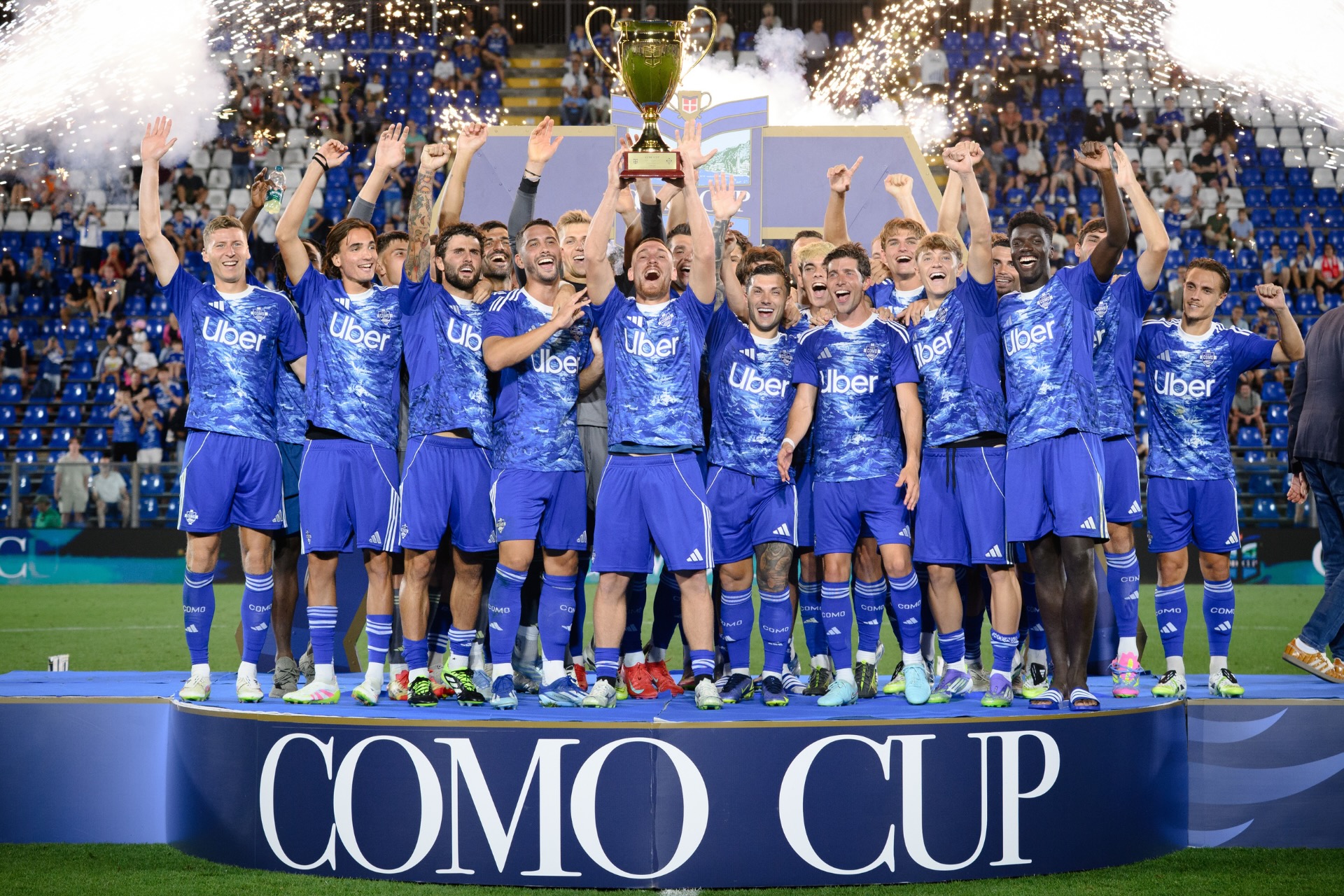
Photo: Como 1907
On the night of 10 September 2026, a club that had been sold at a bankruptcy auction less than a decade earlier walked out to the Champions League anthem at the Stadio Giuseppe Sinigaglia. Como beat RB Leipzig 4–1. Martin Baturina scored the first European goal in the club's history, Tasos Douvikas, Assane Diao and Máximo Perrone added the rest, and a stadium renovated over the summer just to meet UEFA's requirements finally had a night worthy of its lakeside address.
It is tempting to tell this as a story about money. The Hartono brothers, owners of the Djarum Group and for years Indonesia's richest family, are the wealthiest proprietors in Italian football. But money has never been scarce in Serie A, and plenty of rich owners have bought clubs and watched them sink. What sets Como apart is less the size of the cheque than the shape of the trust behind it, and the man who was handed that trust.
A club with nothing left to sell
Como is an old club with a thin trophy cabinet. Founded in 1907, it enjoyed a bright spell in Serie A in the 1980s and produced players like Gianluca Zambrotta, but its modern history reads mostly as a ledger of collapse. The club went bankrupt after a brief top-flight return in the early 2000s, was refounded, then failed again in 2016. At the bankruptcy auction it passed to Akosua Puni Essien, wife of former Chelsea midfielder Michael Essien, and after being excluded from the professional league it had to restart in Serie D, Italy's amateur fourth tier, in 2017/18.
On 4 April 2019, SENT Entertainment, a London-based media company controlled by the Djarum Group, took over. The price was almost embarrassingly small. Speaking in Jakarta that October, Mirwan Suwarso put it at under Rp5 billion and described the deal as redeeming something from a pawnshop: an abandoned asset that simply needed polishing.
It started as a documentary
The acquisition was not originally a football strategy. It was a media one. Djarum's broadcasting arm needed content for Mola TV, and Suwarso, a filmmaker by background, was in Italy shooting a documentary about the club. The early plan also imagined Como's training ground as a home for Garuda Select, the Djarum–PSSI programme that sends young Indonesian players to develop in Europe.
That origin explains why Suwarso was there at all. He was not a football executive found through a headhunter. A native of Madiun, East Java, he came up through advertising at Saatchi & Saatchi and made films, including the football drama Golden Goal!. He then moved into sports media inside the Djarum orbit, including Super Soccer TV, the platform that brought European football to Indonesian screens. When the family needed someone on the ground in Como, it chose someone it already knew.
Trust, delegated in layers
What followed was not a one-man show, and it would be unfair to present it as one. In the early years, operations were led by Michael Gandler, formerly of Inter's marketing department under Erick Thohir, who spoke of building a "digital Ajax" rather than a spending machine. Former England midfielder Dennis Wise, who had already spent two years at the club as a technical consultant, took over as chief executive in 2021 and later served as club president. Through this period, Suwarso was the family's trusted man in Italy, the bridge between owners in Indonesia and a management team on Lake Como.
The climb was patient rather than frantic. Como won Serie D in 2019 with a points record, reached Serie B in 2021, then spent three seasons consolidating. In August 2022, Cesc Fàbregas signed on as both a player, for what became his final season as a professional, and a shareholder in the club. Thierry Henry also came in as a minority shareholder while the club was still in Serie B. When the head coach left in November 2023, Fàbregas took interim charge, then stepped back to assistant coach that December once his lack of a UEFA Pro License became an obstacle, with Osian Roberts installed as the club's official head coach for the rest of the campaign. Como still finished second. On 10 May 2024, a 1–1 draw with Cosenza sealed promotion to Serie A for the first time in 21 years, and Fàbregas was reappointed permanent head coach two months later.
Only later, in 2024, did Suwarso formally become club president. It is a telling sequence. The Hartonos did not install their man at the top and hope for the best. They let him earn the chair over five years of doing the work.
From football club to city project
Suwarso's instincts as an ad man shaped what Como became. He has openly cited Disney as a reference point: shared media and merchandising with the city and region, a park on the lake, and a modern stadium offering entertainment all week rather than ninety minutes every other Sunday. Uber came in as main sponsor for 2024/25, and midway through that season, in January 2025, the club signed a strategic partnership with Ajax. The idea was to treat Lake Como, one of the most photographed places in Europe, as a brand that a football club could carry to the world.
On the pitch, the owners backed Fàbregas properly. Como finished 10th in their first season back and turned away approaches for their coach from bigger clubs. In 2025/26 they finished fourth on 71 points, reached the Coppa Italia semi-finals, and clinched Champions League football on the final day with a 4–1 win at Cremonese. Fàbregas was named Serie A Coach of the Year.
The owner who never came
There is a quiet detail in all of this. According to the Italian press, Michael Bambang Hartono never personally visited Como. He died in Singapore on 19 March 2026, aged 86, two months before the club he had rescued secured its place among Europe's elite. Serie A president Ezio Simonelli paid tribute to his vision and passion, and extended his condolences to the club and its president, Mirwan Suwarso.
That absence says something about how the Hartonos operate. This is a family that turned a kretek company into a conglomerate reaching all the way to Bank Central Asia, largely by holding assets for decades and letting capable people run them. Como fits the pattern: buy cheaply, hold patiently, delegate deeply.
What investors can take from it
For readers who follow Indonesian capital markets, Como is a small asset with a familiar lesson. Returns, in sport as in banking, rarely come from the purchase price. They come from what happens during the holding period. The Hartonos paid pocket change for Como, and what they spent afterward on players, facilities and stadium upgrades was far larger. But the scarcest input was never money. It was a person they could trust to spend it well, for seven years, without needing to be watched.
Mirwan Suwarso went to Lake Como to film the story of a broken club. He stayed long enough to rewrite its ending.
For a longer account in Suwarso's own words, the podcast Business of Sport interviewed him directly about the club's turnaround.
Foto: Como 1907
Malam 10 September 2026, sebuah klub yang belum genap sepuluh tahun sebelumnya dilelang karena bangkrut berdiri di lapangan Stadio Giuseppe Sinigaglia, mendengarkan lagu kebangsaan Liga Champions. Como menaklukkan RB Leipzig 4–1. Martin Baturina mencetak gol Eropa pertama sepanjang sejarah klub, lalu Tasos Douvikas, Assane Diao, dan Máximo Perrone menggenapkan pesta. Stadion tua di bibir danau itu, yang direnovasi sepanjang musim panas demi memenuhi standar UEFA, akhirnya punya malam yang pantas dikenang.
Kisah ini gampang sekali dibaca sebagai cerita tentang uang. Keluarga Hartono, pemilik Grup Djarum dan bertahun-tahun menjadi keluarga terkaya di Indonesia, adalah pemilik klub paling tajir di sepak bola Italia. Uang sebenarnya tidak pernah langka di Serie A, dan sudah banyak pemilik kaya yang membeli klub lalu melihatnya tenggelam. Pembeda Como tidak terletak pada besarnya cek yang ditulis. Pembedanya ada pada bentuk kepercayaan di baliknya, serta pada sosok yang diberi kepercayaan itu.
Klub yang sudah tak punya apa-apa lagi
Como adalah klub tua dengan lemari trofi yang nyaris kosong. Klub yang berdiri pada 1907 ini sempat bersinar di Serie A pada era 1980-an dan melahirkan pemain seperti Gianluca Zambrotta. Sejarah modernnya justru lebih banyak diisi kisah jatuh ketimbang bangun. Como bangkrut setelah sempat kembali sebentar ke kasta tertinggi di awal 2000-an, didirikan ulang, lalu kolaps lagi pada 2016. Dalam lelang pailit, klub ini jatuh ke tangan Akosua Puni Essien, istri mantan gelandang Chelsea Michael Essien. Como kemudian dicoret dari liga profesional dan harus memulai lagi dari Serie D, kasta keempat yang berstatus amatir, pada musim 2017/18.
Pada 4 April 2019, SENT Entertainment, perusahaan media berbasis di London yang dikendalikan Grup Djarum, mengambil alih klub. Harganya nyaris bikin geleng-geleng kepala. Di Jakarta pada Oktober tahun itu, Mirwan Suwarso menyebut nilainya tak sampai Rp5 miliar. "Istilahnya, kami menebus di pegadaian," katanya. Mirwan mengibaratkan Como sebagai aset terbengkalai yang tinggal dipoles lagi.
Berawal dari film dokumenter
Akuisisi ini awalnya bukan strategi sepak bola, melainkan strategi media. Lini penyiaran Djarum butuh konten untuk Mola TV, dan Mirwan, yang berlatar belakang sineas, sedang berada di Italia menggarap film dokumenter tentang klub tersebut. Rencana awalnya pun sempat membayangkan tempat latihan Como sebagai markas Garuda Select, program kolaborasi Djarum dan PSSI untuk mengirim pemain muda Indonesia berkembang di Eropa.
Latar belakang inilah yang menjelaskan keberadaan Mirwan di sana. Ia bukan eksekutif sepak bola hasil rekrutan headhunter. Pria asal Madiun, Jawa Timur, ini meniti karier di dunia periklanan di Saatchi & Saatchi, lalu membuat film, termasuk drama sepak bola Golden Goal!. Ia kemudian masuk ke industri media olahraga di lingkaran Djarum, termasuk Super Soccer TV, platform yang membawa sepak bola Eropa ke layar kaca Indonesia. Keluarga Hartono pun memilih orang yang sudah mereka kenal saat membutuhkan sosok di lapangan.
Kepercayaan yang diberikan bertahap
Perjalanan Como selanjutnya bukan pertunjukan satu orang, dan tidak adil jika diceritakan seolah begitu. Di tahun-tahun awal, operasional klub dipimpin Michael Gandler, mantan orang pemasaran Inter di era Erick Thohir, yang bicara soal membangun "Ajax versi digital" alih-alih mesin belanja. Mantan gelandang timnas Inggris Dennis Wise, yang sudah dua tahun lebih dulu bergabung sebagai konsultan teknis, naik menjadi chief executive pada 2021 dan belakangan menjabat presiden klub. Sepanjang periode itu, Mirwan adalah orang kepercayaan keluarga di Italia, jembatan antara pemilik di Indonesia dan jajaran manajemen di tepi Danau Como.
Pendakiannya sabar, tidak terburu-buru. Como menjuarai Serie D pada 2019 dengan rekor poin, naik ke Serie B pada 2021, lalu menghabiskan tiga musim untuk mengonsolidasikan diri. Pada Agustus 2022, Cesc Fàbregas bergabung sekaligus sebagai pemain, untuk apa yang menjadi musim terakhirnya sebagai pesepak bola profesional, dan sebagai pemegang saham klub. Thierry Henry juga bergabung sebagai pemegang saham minoritas saat klub masih berlaga di Serie B. Fàbregas mengambil alih kemudi sebagai pelatih interim setelah pelatih kepala hengkang pada November 2023, lalu mundur menjadi asisten pelatih pada Desember itu juga setelah ketiadaan lisensi UEFA Pro miliknya jadi ganjalan, dengan Osian Roberts didapuk sebagai pelatih kepala resmi untuk sisa musim itu. Como tetap finis di posisi kedua. Pada 10 Mei 2024, hasil imbang 1–1 melawan Cosenza memastikan Como kembali ke Serie A untuk pertama kalinya dalam 21 tahun, dan dua bulan kemudian Fàbregas ditunjuk kembali sebagai pelatih kepala permanen.
Mirwan baru resmi menjadi presiden klub belakangan, pada 2024. Urutannya bercerita banyak. Keluarga Hartono tidak asal menaruh orang kepercayaan di puncak lalu berharap semuanya beres. Mereka membiarkannya membuktikan diri lewat lima tahun kerja nyata.
Dari klub bola menjadi proyek kota
Naluri Mirwan sebagai orang iklan membentuk wajah Como hari ini. Ia terang-terangan menjadikan Disney sebagai acuan: media dan merchandise yang digarap bersama kota dan wilayah sekitarnya, taman di tepi danau, serta stadion modern yang menyajikan hiburan sepanjang pekan, bukan cuma 90 menit dua minggu sekali. Uber masuk sebagai sponsor utama musim 2024/25, dan di tengah musim itu, pada Januari 2025, klub menjalin kemitraan strategis dengan Ajax. Gagasannya sederhana: Danau Como, salah satu tempat paling sering difoto di Eropa, adalah merek yang bisa dibawa sebuah klub sepak bola ke seluruh dunia.
Di lapangan, pemilik benar-benar pasang badan untuk Fàbregas. Como finis di peringkat 10 pada musim pertama kembali ke Serie A dan menolak klub-klub lebih besar yang ingin membajak pelatihnya. Pada musim 2025/26, Como finis keempat dengan 71 poin, menembus semifinal Coppa Italia, dan memastikan tiket Liga Champions di pekan terakhir lewat kemenangan 4–1 di kandang Cremonese. Fàbregas dinobatkan sebagai Pelatih Terbaik Serie A.
Pemilik yang tak pernah datang
Satu detail dalam kisah ini nyaris luput dari sorotan. Menurut media Italia, Michael Bambang Hartono tidak pernah sekali pun menginjakkan kaki di Como. Ia wafat di Singapura pada 19 Maret 2026 di usia 86 tahun, dua bulan sebelum klub yang ia selamatkan resmi masuk jajaran elite Eropa. Presiden Liga Serie A, Ezio Simonelli, memberi penghormatan atas visi dan kecintaannya pada sepak bola Italia, serta menyampaikan belasungkawa kepada klub dan presidennya, Mirwan Suwarso.
Ketidakhadiran itu justru menggambarkan cara keluarga Hartono bekerja. Keluarga ini mengubah pabrik kretek menjadi konglomerasi hingga ke Bank Central Asia, sebagian besar dengan menggenggam aset selama puluhan tahun dan menyerahkan pengelolaannya kepada orang-orang yang cakap. Como mengikuti pola yang sama: beli murah, simpan dengan sabar, dan serahkan kemudi kepada orang yang tepat.
Pelajaran bagi investor
Bagi pembaca yang mengikuti pasar modal Indonesia, Como adalah aset kecil dengan pelajaran yang terasa akrab. Imbal hasil, di sepak bola maupun perbankan, jarang datang dari harga beli. Imbal hasil lahir dari apa yang terjadi selama masa kepemilikan. Keluarga Hartono membeli Como dengan harga receh, dan dana yang dikucurkan sesudahnya untuk pemain, fasilitas, dan renovasi stadion jauh lebih besar. Faktor paling langka dalam proyek ini justru bukan uang. Faktor itu berwujud sosok yang bisa dipercaya membelanjakan uang dengan benar, selama tujuh tahun, tanpa perlu terus ditunggui.
Mirwan Suwarso datang ke Danau Como untuk merekam kisah sebuah klub yang nyaris mati. Ia berniat merekam sebuah cerita, tetapi justru ia sendiri yang menuliskan endingnya.
Untuk penjelasan yang lebih panjang langsung dari Suwarso, podcast Business of Sport pernah mewawancarainya secara khusus soal kebangkitan klub ini.