Every central bank in the world is independent on paper. The interesting question is what happens on the day a president decides that piece of paper is inconvenient.
Turkey: the chair was a door
Turkey answered that question in March 2021. Naci Ağbal had been running the central bank for four months and had raised the policy rate to 19% to defend a collapsing lira. He was fired. The lira fell about 13%, and the rate cuts that followed sent it into free fall. The dismissal was not a fit of temper. Erdoğan has argued for years that high interest rates cause inflation rather than cure it, and he acted on that conviction using an institution he could reshape at will. By early 2024, Turkey was appointing its fifth central bank governor in five years.
The bill arrived on schedule. Official inflation peaked at 85.5% in October 2022. Only then did Erdoğan reverse course, install an orthodox economic team after the May 2023 election, and allow the policy rate to climb from 8.5% to 50% by March 2024. That is the part investors should sit with. Rates ended up far higher than they would ever have gone had Ağbal simply been left alone. Turkey did not avoid tight money. It postponed tight money and paid interest on the delay. Three years later the repair is real but slow. Annual inflation was 32.1% in June 2026, the policy rate stands at 37%, and the lira touched a record 47.3 per dollar this month. Credibility is cheap to burn and expensive to rebuild.
Argentina: the printing press habit
Argentina's version of the story is older and structurally deeper. The emblematic moment came in January 2010, when President Cristina Fernández de Kirchner ordered the central bank to transfer $6.6 billion in reserves to a fund for servicing foreign debt. Governor Martín Redrado refused, arguing that the constitution assigns debt authorisation to Congress, not the executive. He was removed by decree. A judge suspended the removal because Congress had not been notified as the bank's own charter required. Redrado resigned weeks later anyway. The law worked just well enough to slow the process down, and nowhere near well enough to stop it.
What followed was not a policy error but a fiscal habit: the central bank as the treasury's printing press, decade after decade. Inflation reached 211.4% in 2023 and peaked near 289% in April 2024. The disinflation since then has been genuine and fast, and the mechanism deserves to be named precisely. The central bank stopped financing the deficit, which removed a source of pressure that no interest rate policy could have offset. Monthly inflation fell to 1.9% in June 2026, with the annual rate at 33.5%. Notice what actually fixed it. Not a stronger central bank statute. A balanced budget. The IMF's 2026 Article IV review still lists improvements to the BCRA's governance and mandate as essential unfinished work. Argentina bought disinflation with fiscal austerity because its monetary institution had nothing left to spend.
America: pressure meets structure
Now set the United States against that.
Donald Trump has attacked the Federal Reserve more openly and more persistently than any modern president, and for years the target was Chair Jerome Powell. But Powell was never formally removed. In August 2025 Trump went beyond rhetoric against a different official, moving to remove Governor Lisa Cook over mortgage allegations predating her appointment, the first attempted firing in the central bank's 111-year history. Two lower courts blocked it. On 29 June 2026 the Supreme Court ruled 5 to 4 in Trump v. Cook that Cook may remain in office while her challenge proceeds in the lower courts, rejecting the administration's argument that a for-cause removal is unreviewable. It is worth being precise about what that is and is not: the Court did not settle whether the protections themselves are constitutional. It held that the question is one for courts to answer, and that a governor cannot be removed while the answer is pending. Procedure, not doctrine, is what buys time, and time is what kills a removal. The same day, in Trump v. Slaughter, the Court permitted the removal of an FTC commissioner and overturned the 1935 Humphrey's Executor precedent, 6 to 3. Read the two rulings together, and the message is unambiguous. Presidential power over independent agencies expanded almost everywhere, and was carved out at the Fed, and the different vote counts confirm the carve-out was deliberate, not incidental.
The pressure has not stopped, and it has already produced results through entirely legitimate channels. Trump got his chair. Kevin Warsh, who had publicly called for regime change at the Fed, was confirmed 54 to 45 and took office on 22 May 2026. Then something unremarkable happened. At his first policy meeting in June, with headline inflation running at 4.2%, the committee voted unanimously to hold the federal funds rate at 3.50 to 3.75 percent, and nine of eighteen officials pencilled in a hike before year end. When June inflation cooled to 3.5%, Warsh publicly refused to treat it as mission accomplished. A president who spent eight years demanding lower rates installed his own chair and got a hawkish hold.
That is the whole lesson, and it has very little to do with anyone's personal courage. American independence held because the pressure hit too many surfaces at once. Fourteen year staggered terms that outlast administrations. A twelve member voting committee in which five seats belong to regional presidents the White House does not appoint. Senate confirmation. Federal courts willing to enjoin a removal, and a bond market that reprices the moment credibility is questioned. Turkey had one surface, the governor's chair, and it turned out to be a door. Argentina had a charter that could be overridden by decree while Congress was in recess.
Counting veto points
For investors, the practical takeaway is to stop treating central bank independence as a label and start counting veto points. How many people must agree before policy can be politicised? Have the courts ever actually reversed an executive action against the bank, and can the sovereign fund itself without the central bank's balance sheet? That last question matters most, because a government with a financing problem will eventually make it the central bank's problem.
Institutions do not defend themselves. Structures do.
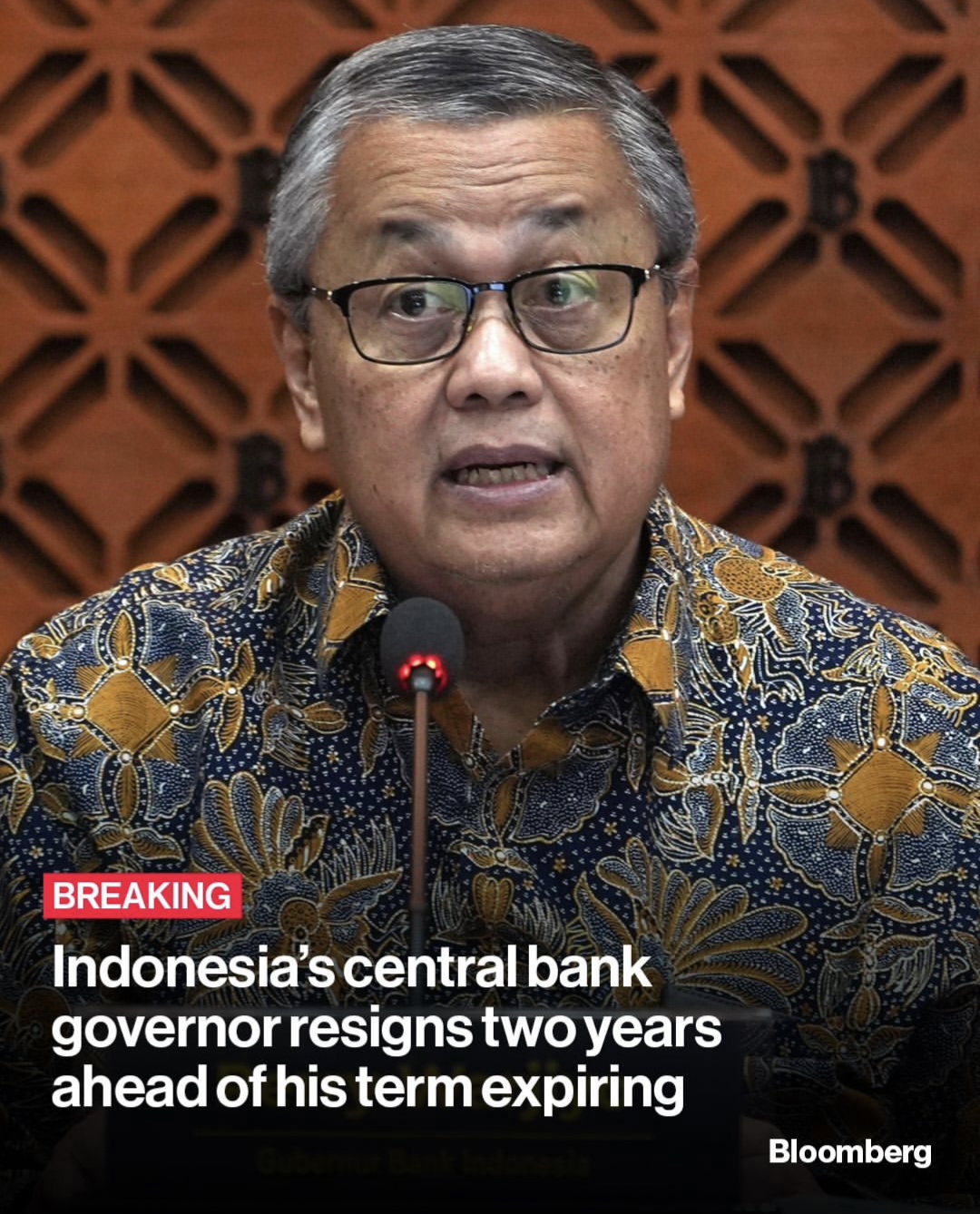
Sumber gambar: Instagram @bloombergbusiness
Semua bank sentral di dunia independen di atas kertas. Pertanyaan yang menarik adalah apa yang terjadi pada hari seorang presiden memutuskan bahwa kertas itu merepotkan.
Turki: kursi yang ternyata pintu
Turki menjawab pertanyaan itu pada Maret 2021. Naci Ağbal baru empat bulan memimpin bank sentral dan sudah menaikkan suku bunga acuan ke 19% untuk menahan lira yang terus jatuh. Ia dipecat. Lira anjlok sekitar 13%, dan rangkaian pemangkasan bunga sesudahnya membuatnya jatuh bebas. Pemecatan itu bukan luapan emosi sesaat. Erdoğan sudah bertahun tahun berpendapat bahwa suku bunga tinggi justru menyebabkan inflasi, bukan menyembuhkannya, dan ia menjalankan keyakinan itu lewat lembaga yang bisa ia bentuk ulang sesuka hati. Sampai awal 2024, Turki sudah melantik gubernur bank sentral kelimanya dalam lima tahun.
Tagihannya datang tepat waktu. Inflasi resmi memuncak di 85,5% pada Oktober 2022. Baru setelah itu Erdoğan berbalik arah, memasang tim ekonomi ortodoks pasca pemilu Mei 2023, dan membiarkan suku bunga acuan naik dari 8,5% menjadi 50% pada Maret 2024. Bagian inilah yang perlu direnungkan investor. Suku bunga akhirnya harus naik jauh lebih tinggi dibanding seandainya Ağbal dibiarkan bekerja. Turki tidak menghindari kebijakan ketat. Turki hanya menundanya, lalu membayar bunga atas penundaan itu. Tiga tahun kemudian, perbaikannya nyata tetapi lambat. Inflasi tahunan tercatat 32,1% pada Juni 2026, suku bunga acuan bertahan di 37%, dan lira menyentuh rekor terlemah 47,3 per dolar bulan ini. Kredibilitas murah untuk dibakar dan mahal untuk dibangun kembali.
Argentina: kebiasaan mesin cetak
Versi Argentina lebih tua dan lebih dalam secara struktural. Momen paling ikoniknya terjadi pada Januari 2010, ketika Presiden Cristina Fernández de Kirchner memerintahkan bank sentral menyerahkan cadangan devisa senilai 6,6 miliar dolar untuk membayar utang luar negeri. Gubernur Martín Redrado menolak, dengan alasan konstitusi menempatkan kewenangan atas utang di tangan Kongres, bukan eksekutif. Ia diberhentikan lewat dekret. Seorang hakim menangguhkan pemberhentian itu karena Kongres tidak diberi tahu sebagaimana diwajibkan anggaran dasar bank sentral sendiri. Beberapa minggu kemudian Redrado toh mengundurkan diri. Hukum bekerja cukup untuk memperlambat proses, dan sama sekali tidak cukup untuk menghentikannya.
Yang terjadi sesudahnya bukan sekadar kesalahan kebijakan, melainkan kebiasaan fiskal: bank sentral sebagai mesin cetak uang bagi kas negara, dekade demi dekade. Inflasi menembus 211,4% pada 2023 dan memuncak di kisaran 289% pada April 2024. Disinflasi sesudahnya memang nyata dan cepat, dan mekanismenya perlu disebut secara tepat. Bank sentral berhenti membiayai defisit, dan itu menghapus sumber tekanan yang tidak akan bisa diimbangi oleh kebijakan suku bunga apa pun. Inflasi bulanan turun ke 1,9% pada Juni 2026, dengan laju tahunan 33,5%. Perhatikan apa yang sebenarnya menyembuhkan. Bukan undang undang bank sentral yang lebih kuat, melainkan anggaran yang seimbang. Laporan Article IV IMF 2026 masih mencantumkan perbaikan tata kelola dan mandat BCRA sebagai pekerjaan rumah yang belum selesai. Argentina membeli disinflasi dengan austerity fiskal karena lembaga moneternya sudah tidak punya apa apa lagi untuk dibelanjakan.
Amerika: tekanan membentur struktur
Sekarang bandingkan dengan Amerika Serikat.
Donald Trump menyerang The Fed lebih terbuka dan lebih gigih dibanding presiden modern mana pun, dan selama bertahun-tahun sasarannya adalah Ketua Jerome Powell. Namun Powell tidak pernah benar-benar diberhentikan. Pada Agustus 2025, Trump melangkah lebih jauh dari retorika terhadap pejabat yang berbeda, berusaha memberhentikan Gubernur Lisa Cook atas tuduhan terkait KPR yang terjadi sebelum ia menjabat, upaya pemecatan pertama dalam 111 tahun sejarah bank sentral itu. Dua pengadilan tingkat bawah menghalangi langkah tersebut. Pada 29 Juni 2026, Mahkamah Agung memutus 5 lawan 4 dalam perkara Trump v. Cook bahwa Cook boleh tetap menjabat selama gugatannya masih berproses di pengadilan tingkat bawah, sekaligus menolak argumen pemerintah bahwa pemberhentian for cause tidak bisa diuji ke pengadilan. Penting untuk menggambarkan dengan tepat apa yang sebenarnya diputuskan dan apa yang tidak: Mahkamah tidak menetapkan apakah perlindungan itu sendiri konstitusional. Mahkamah hanya menyatakan bahwa pertanyaan itu adalah wewenang pengadilan untuk menjawabnya, dan bahwa seorang gubernur tidak bisa diberhentikan selama jawabannya belum ada. Prosedur, bukan doktrin, yang membeli waktu, dan waktu itulah yang mematikan sebuah pemberhentian. Pada hari yang sama, dalam perkara Trump v. Slaughter, Mahkamah mengizinkan pemberhentian seorang komisioner FTC dan membatalkan preseden Humphrey's Executor dari 1935, dengan skor 6 lawan 3. Baca kedua putusan itu bersamaan, dan pesannya jelas. Kekuasaan presiden atas lembaga independen meluas hampir di semua lini, dan dikecualikan di The Fed, dan perbedaan jumlah suara ini menunjukkan bahwa pengecualian itu disengaja, bukan kebetulan.
Tekanannya belum berhenti, dan sebagian sudah membuahkan hasil lewat jalur yang sepenuhnya sah. Trump mendapatkan ketuanya. Kevin Warsh, yang pernah secara terbuka menyerukan regime change di The Fed, dikonfirmasi Senat 54 lawan 45 dan mulai menjabat pada 22 Mei 2026. Lalu terjadi sesuatu yang sama sekali biasa. Pada rapat kebijakan pertamanya di Juni, dengan inflasi utama di 4,2%, komite memutuskan secara bulat mempertahankan federal funds rate di kisaran 3,50 sampai 3,75 persen, dan sembilan dari delapan belas pejabat memperkirakan kenaikan sebelum akhir tahun. Ketika inflasi Juni melandai ke 3,5%, Warsh secara terbuka menolak menyebutnya sebagai kemenangan. Presiden yang selama delapan tahun menuntut bunga lebih rendah memasang ketuanya sendiri, dan yang ia dapat adalah keputusan bertahan bernada hawkish.
Itulah inti pelajarannya, dan kaitannya sangat kecil dengan keberanian pribadi siapa pun. Independensi Amerika bertahan karena tekanan itu membentur terlalu banyak permukaan sekaligus. Masa jabatan empat belas tahun yang berselang seling dan melampaui usia satu pemerintahan. Komite pemungutan suara beranggota dua belas orang, lima di antaranya presiden Fed regional yang tidak ditunjuk Gedung Putih. Konfirmasi Senat. Pengadilan federal yang bersedia menghentikan pemberhentian, dan pasar obligasi yang langsung menghitung ulang harga begitu kredibilitas dipertanyakan. Turki hanya punya satu lapisan pertahanan, yaitu kursi gubernur, dan ternyata itu bukan tembok, melainkan sebuah pintu masuk. Argentina punya temboknya sendiri, yakni anggaran dasarnya, tapi tembok itu bisa dirobohkan lewat dekret saat Kongres sedang melaksanakan reses.
Menghitung titik veto
Bagi investor, kesimpulan praktisnya adalah berhenti memperlakukan independensi bank sentral sebagai label, dan mulai menghitung titik veto. Berapa banyak orang yang harus setuju sebelum kebijakan moneter bisa dipolitisasi? Pernahkah pengadilan benar benar membatalkan tindakan eksekutif terhadap bank sentral, dan mampukah negara membiayai dirinya sendiri tanpa neraca bank sentral? Pertanyaan terakhir yang paling menentukan, sebab pemerintah yang punya masalah pembiayaan cepat atau lambat akan menjadikannya masalah bank sentral.
Lembaga tidak membela dirinya sendiri. Struktur yang membelanya.